

Telenet Case Study
Case Study
How Telenet Cut Calls by 30%

How AI is Transforming BX
Download Insight

MCP & A2A AI Protocols
Download Insight
Bills Don’t Drive Calls. Confusion Does.
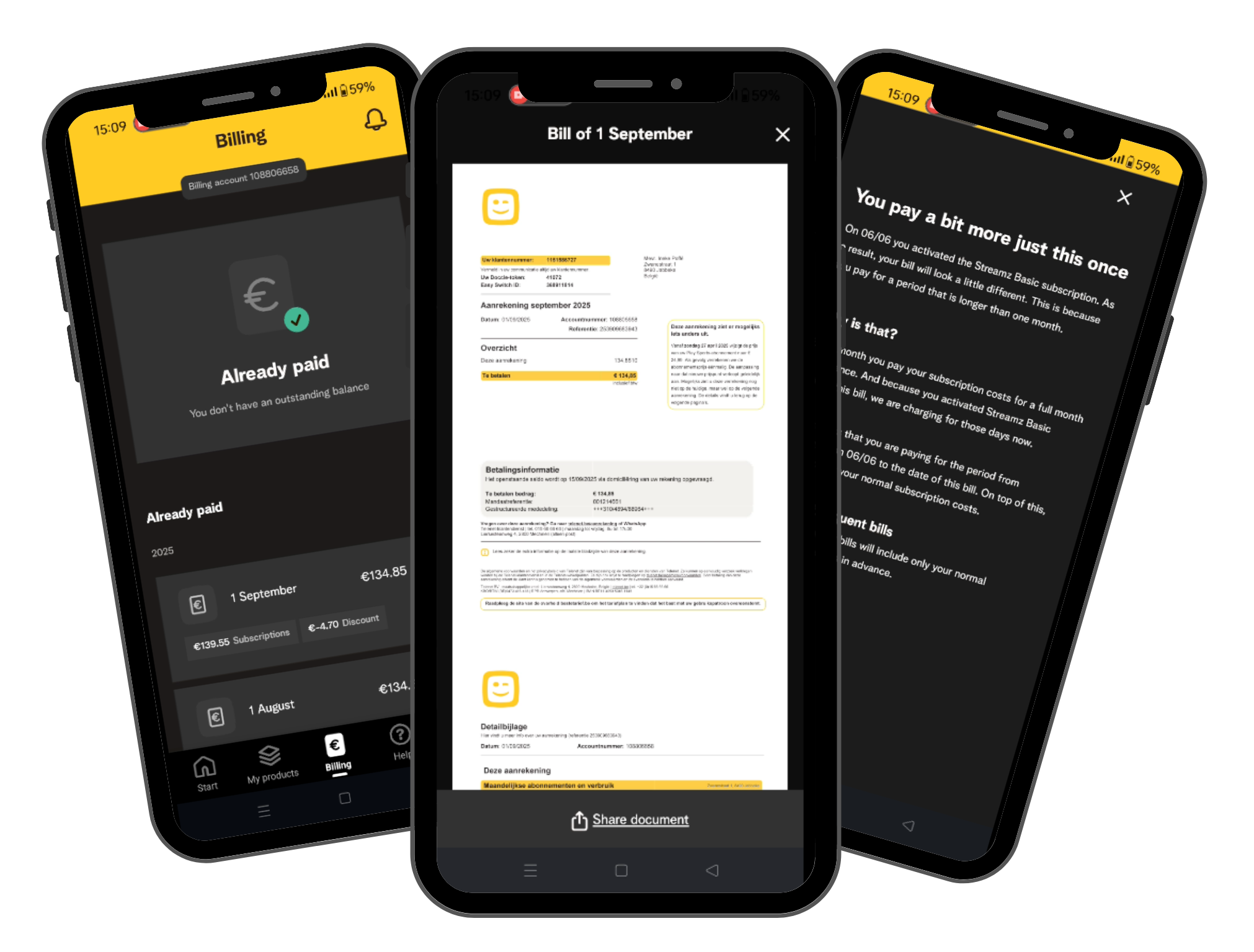
Telenet was handling almost 2 million billing-related customer contacts every year.
The problem wasn’t billing accuracy. It was bill understanding.
Customers struggled to understand common bill scenarios:
- First bills
- Prorated charges
- Plan changes
- Expiring discounts
Instead of replacing billing systems, Telenet introduced a Bill Intelligence Layer to turn fragmented billing data into clear customer explanations.
The result:
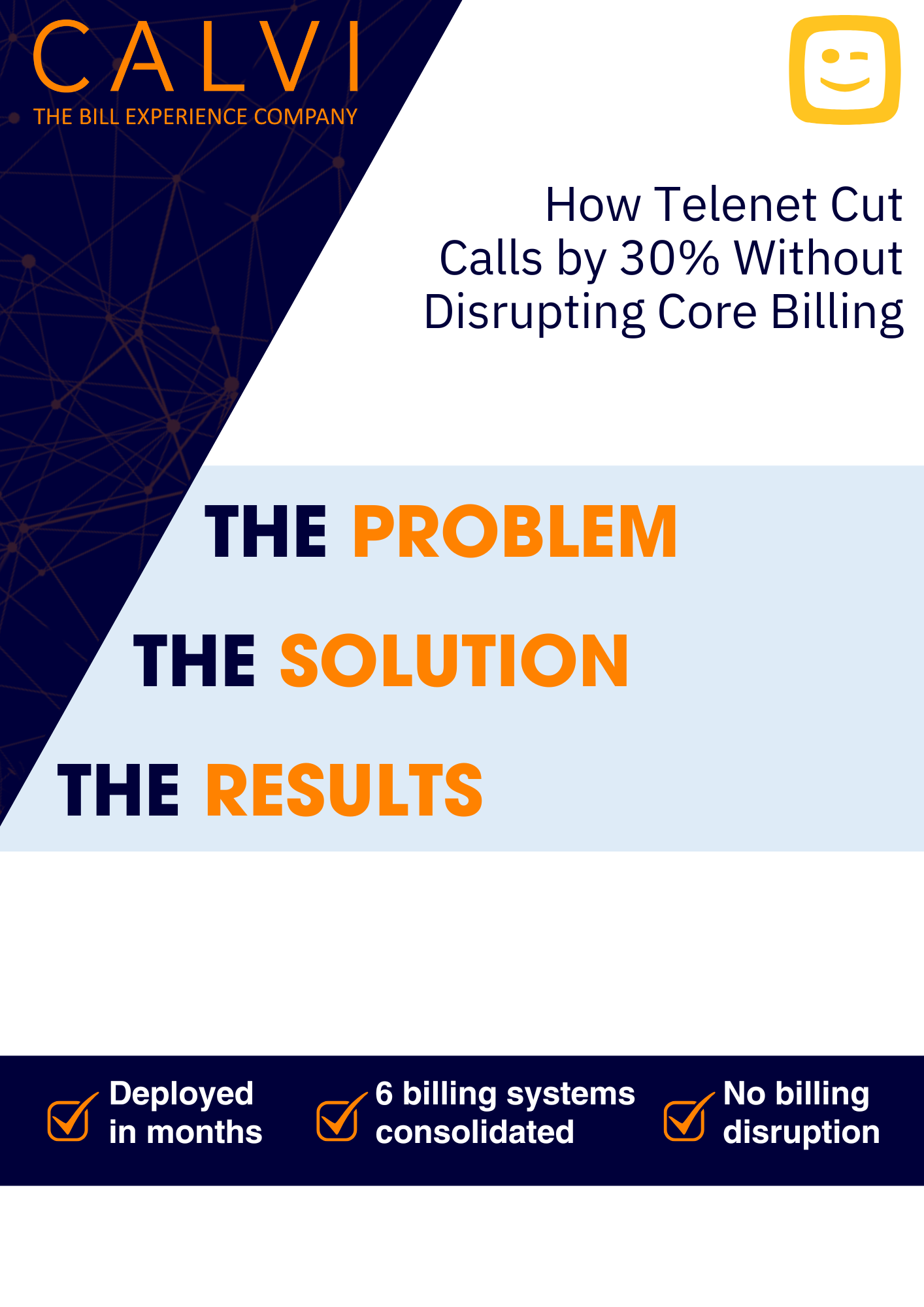
- 30% fewer billing inquiries
- €1.2M lower cost-to-serve
- Delivered in just 4 months
The bill wasn’t the problem. Understanding it was.
Access the full Telenet case study below.
Calvi Product Brochure
Download Brochure
Telenet Case Study
Case Study
How Telenet Cut Calls by 30%
How AI is Transforming BX
Download Insight
MCP & A2A AI Protocols
Download Insight
Bill Intelligence: The Missing Foundation for AI
Most operators already know which billing scenarios generate the most customer confusion.
The challenge isn’t knowing they exist. It’s identifying them early enough to act.
A Bill Intelligence Layer helps operators proactively identify likely call drivers, explain them before confusion occurs, and deliver consistent answers across every customer touchpoint.
It also gives AI the billing context needed to understand and explain complex telecom bills.
Without it, AI must first interpret billing data spread across multiple systems before it can answer simple customer questions.
Billing systems calculate charges. Bill Intelligence provides the meaning behind them.
Explore the resources below to learn how AI is transforming the telecom bill experience.
Calvi Product Brochure
Download Brochure
Telenet Case Study
Case Study
How Telenet Cut Calls by 30%
How AI is Transforming BX
Download Insight
MCP & A2A AI Protocols
Download Insight
DTW Ignite & TM Forum Billing FAQ
What is DTW Ignite and why is it relevant for telecom operators?
DTW Ignite is TM Forum’s flagship industry event where telecom operators share how they are addressing real operational challenges such as billing complexity, customer experience, and AI adoption. Unlike typical vendor-led conferences, the focus is on practical implementations, including how operators are improving billing clarity, reducing cost to serve, and modernising legacy environments without full system replacement.
What are TM Forum standards in telecom?
TM Forum standards define how telecom systems interact across domains such as billing, customer management, and service orchestration. Through Open APIs and Open Digital Architecture, they enable operators to expose and reuse data consistently across channels. In billing, this separation is critical in multi-system environments where solutions like the Bill Experience Hub unify how data is consumed.
Why are TMF standards important for telecom billing?
Most operators run multiple billing platforms across mobile, fixed, prepaid, and enterprise services. TM Forum standards help normalise how billing data is structured and accessed across these systems. However, while they improve consistency at a data level, they do not address how that data is interpreted by customers, which remains a key driver of billing-related calls. Solutions such as the Bill Presentment Portal help close this gap.
How does Calvi align with TM Forum standards?
Calvi aligns with TM Forum Open APIs such as TMF678 (Customer Bill) and TMF666 (Account Management), ensuring billing and account data can be accessed in a consistent, standardised way. On top of this, Calvi adds a bill intelligence layer that applies logic, context, and explanation to that data, without requiring changes to underlying billing systems.
How does this apply in practice for telecom operators?
In practice, operators do not struggle to generate bills, they struggle to explain them. At Telenet, improving how bills were structured and explained across digital channels and customer support led to a 30% reduction in billing-related calls. This was achieved by improving invoice clarity through solutions such as the Bill Presentment Portal.
What is TMF678 (Customer Bill API)?
TMF678 defines how a bill is structured and exposed, including charges, usage, and totals. It provides a consistent format across systems, which is essential in converged billing environments. However, it does not define how complex elements such as prorated charges or bundled services should be explained to customers. Solutions like the Bill Presentment Portal build on this foundation.
What is TMF666 (Account Management API)?
TMF666 standardises how customer and billing account relationships are structured, including hierarchies used in enterprise environments. This is critical for linking services, invoices, and cost centres. When combined with CRM Bill Intelligence, it enables a consistent and contextual customer view across channels.
What is bill explainability in telecom?
Bill explainability is the ability to take technically correct billing data and present it in a way that customers can understand. This includes scenarios such as prorated charges, usage spikes, and discount application. Solutions like the Bill Communications Suite ensure consistent explanations across all channels.
Why do telecom bills cause so many customer enquiries?
Telecom bills combine multiple charging models across different systems into a single invoice. The lack of consistent logic and explanation across channels means customers cannot easily reconcile what they see. Improving proactive bill communication helps prevent confusion before it results in a call.
How can telecom operators reduce billing-related calls?
Reducing billing-related calls requires improving how billing information is explained, not just how it is calculated. Operators that provide consistent explanations across digital channels, contact centres, and AI systems can resolve questions before they result in a call, using solutions such as the Bill Communications Suite and AI Bill Inquiry Agent.
What is a bill intelligence layer?
A bill intelligence layer sits above existing billing systems and creates a single, consistent representation of the bill. It consolidates data, applies standardised logic, and generates explanations that can be reused across channels.
Do telecom operators need to replace their billing systems to improve customer experience?
No. Replacing billing systems is expensive and high-risk. Most billing-related issues are not caused by incorrect calculations, but by poor explainability. Operators can achieve significant improvements by improving how billing data is structured and explained, using solutions like the Bill Experience Hub.
Interested in a demo?
Please fill out the form and we will get in touch with you as soon as possible
Thank you for being interested in becoming part of our motivated team of professionals!
Please send your motivational letter and CV to careers@calvi-insight.com and we will get in touch with you soon.
How can we help you?
How can we help you?
Please fill out the form and we will get in touch with you as soon as possible