Accurate, Yet Confusing
Charges can be calculated correctly while the total remains difficult for customers and agents to understand

A bill does not have to be wrong to trigger a customer call. It only has to be difficult to understand. Billing data can show every charge accurately without explaining how those charges relate or how they combine to produce the total. That gap leaves customers and contact center agents without a clear explanation and prevents AI from providing one reliably.
Charges can be calculated correctly while the total remains difficult for customers and agents to understand

Bills and billing records show what was charged, but not how the charges relate or why the total makes sense

Reliable automation requires established billing context, not simply access to bills and raw transactions
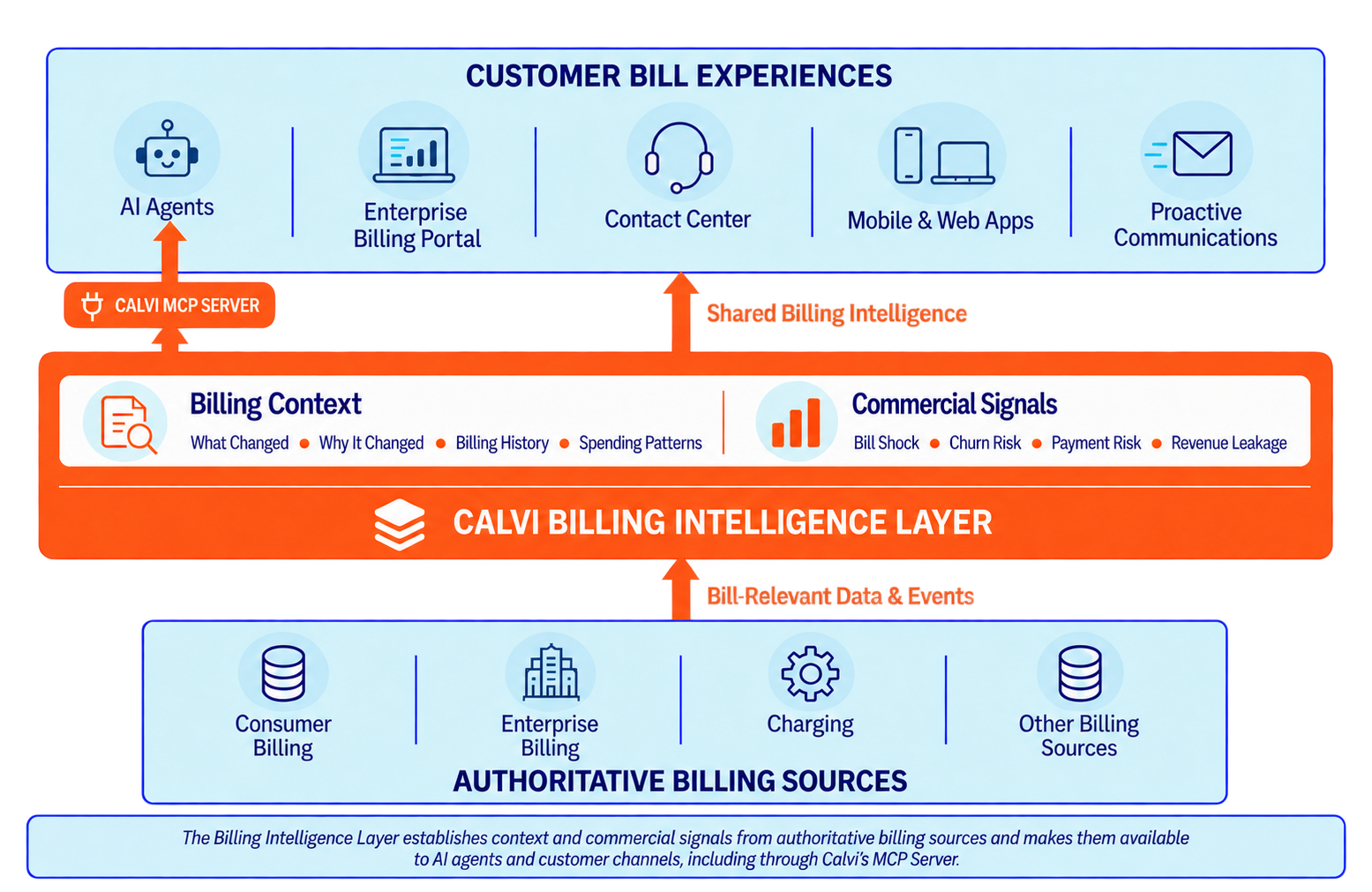
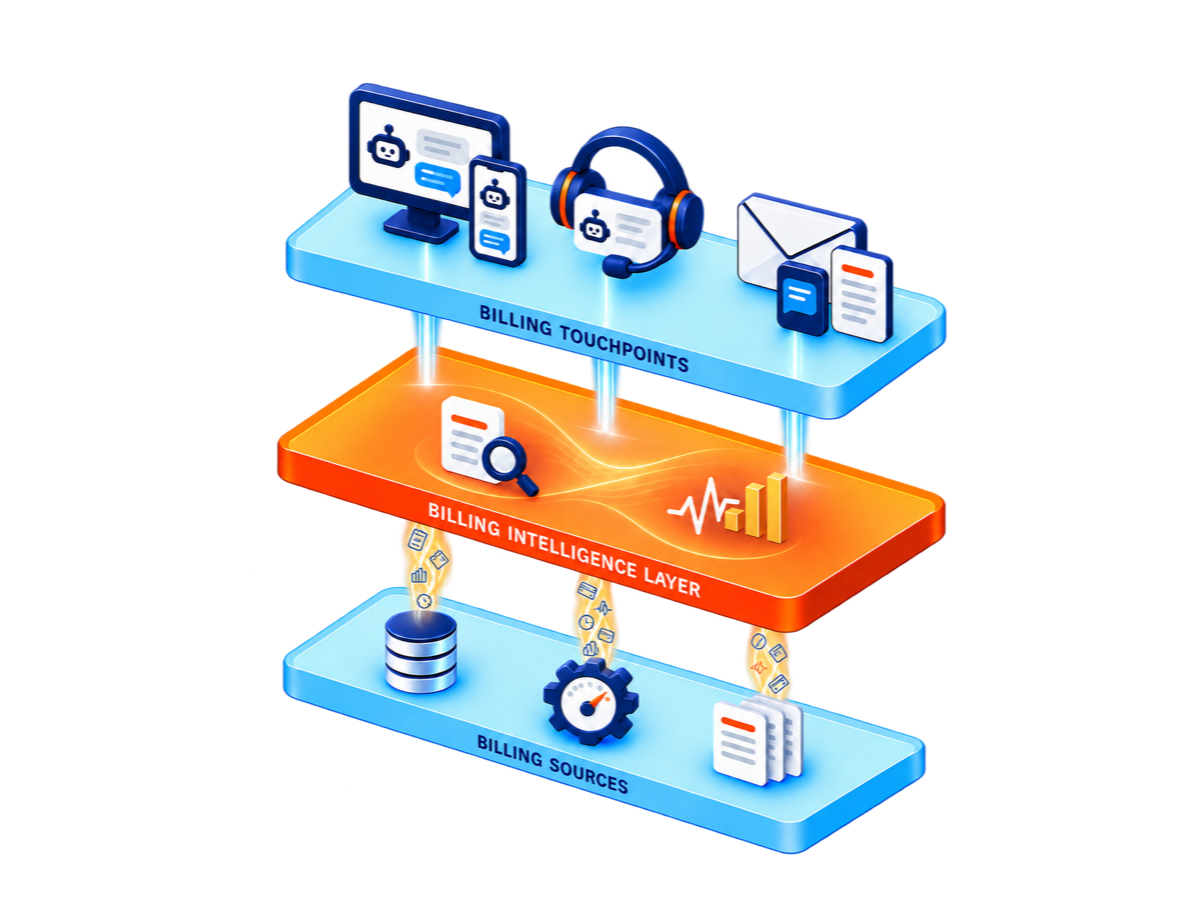
A Billing Intelligence Layer establishes the missing context once and makes it available wherever the bill needs to be understood or explained. It:
Correlates billing data, customer events and historical bills.
Establishes how charges combine and what affected the amount due.
Enriches that context with customer, risk and commercial signals.
Delivers consistent billing intelligence to AI agents and customer touchpoints.
AI can use that established intelligence instead of reconstructing an understanding of the bill from raw data for every inquiry. This supports more accurate, consistent and traceable answers while reducing processing costs.
Billing and charging systems remain authoritative for calculations, rules and decisions.
For CSPs, the value of billing intelligence comes from making established context reusable across the business, including customer care, digital service, collections, retention and revenue protection. Teams and systems in each area can work from the same facts, helping customers receive consistent explanations wherever an inquiry begins.
For CSPs scaling AI, this avoids requiring every agent and channel to interpret raw billing data independently each time a customer asks about their bill. New agents, channels and use cases can draw on the same context without creating separate bill-explanation logic, reducing repeated AI processing and making automation more scalable and cost-efficient.
A Billing Intelligence Layer is designed to fit within a CSP’s existing technology landscape, operating alongside billing, charging, CRM and related BSS platforms while integrating with the CSP’s AI ecosystem.
Through APIs and Calvi’s Model Context Protocol (MCP) Server, it makes enriched billing context and commercial signals available to AI platforms, agents and digital touchpoints. Calvi’s AI Bill Inquiry Agent can also act as a specialist billing agent within an Agent-to-Agent (A2A) ecosystem.
This gives CSPs a practical route to make established billing intelligence available across their existing AI ecosystem.
Bill Experience Hub™ is Calvi’s product for delivering the Billing Intelligence Layer across consumer, SoHo and enterprise bill experiences. It works alongside existing billing and BSS platforms, which remain authoritative for calculations and rules.
It correlates bill-relevant data, customer events and historical bills, applying telecom-specific billing scenario logic to create reusable billing context and commercial signals for AI agents and customer touchpoints.
Built on more than 30 years of telecom billing experience, Bill Experience Hub™ gives CSPs an established foundation for consistent bill interpretation without rebuilding bill-explanation logic for every channel and AI use case.
See billing intelligence in action across AI bill inquiry automation, contact center workflows, digital apps and APIs, proactive bill communications and enterprise bill self-service.


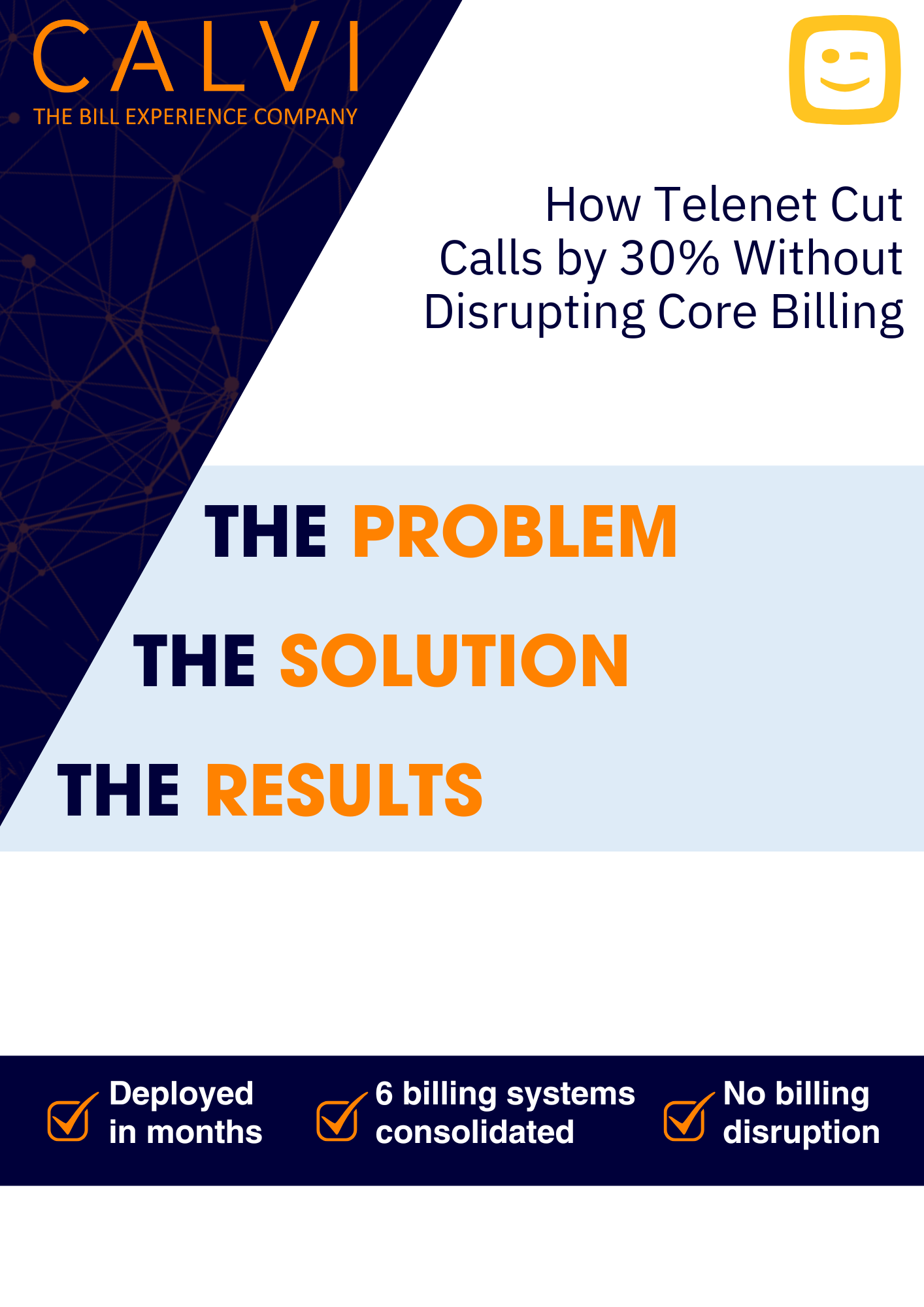
How Telenet Cut Calls by 30%

A Billing Intelligence Layer is an architectural capability that connects relevant billing and account data, establishes what changed, why it changed and the impact on the current bill and future charges, and makes that context available to AI agents, customer channels and downstream systems. It works alongside existing billing and BSS platforms rather than replacing them.
Billing data consists of records and events produced by billing, charging, payment and related systems. Billing context establishes the relationships between those records, including what changed, why it changed and the resulting impact on the bill. Billing intelligence combines that context with relevant customer, risk and commercial signals.
Billing platforms are designed to calculate charges, apply tariffs and discounts, and produce accurate bills. They are not generally designed to assemble and communicate the complete explanation of why a bill changed across services, events, payments, credits and previous billing periods.
A PDF bill or access to underlying records may show individual charges, credits and totals without showing how they relate. For example, a plan change can produce prorated charges, revised discounts, credits and a new advance charge. A reliable AI bill explanation requires those relationships to be established before the customer interaction.
A data lake stores and organizes data, while an API layer exposes data and system functions. Neither necessarily establishes the bill-specific relationships needed to explain what changed, why it changed and the impact on current and future charges. A Billing Intelligence Layer can use data lakes and APIs as part of its architecture, but adds reusable billing context and relevant customer, risk and commercial signals.
A Billing Intelligence Layer supplies established billing context and relevant signals to generative AI models and AI agents through defined interfaces. This allows AI in telecom billing to concentrate on the customer interaction and explanation rather than reconstructing billing relationships from fragmented records during every inquiry. Appropriate model controls, testing, validation and monitoring are still required.
No. A Billing Intelligence Layer is a reusable architectural capability that supplies billing context and relevant signals to multiple channels and systems. An AI agent or chatbot is one possible consumer of that intelligence and is responsible for conducting the customer interaction.
A Billing Intelligence Layer sits between authoritative billing, charging, CRM and related BSS systems and the AI agents, customer channels and downstream systems that use their outputs. It connects bill-relevant data and events from existing and legacy billing systems through interfaces and connectors, while those source systems remain responsible for their calculations, rules and decisions.
No. A Billing Intelligence Layer does not calculate charges, rerate usage, apply discounts or alter the bill. Core billing logic remains in the systems designed and authorized to perform it. This allows CSPs to introduce billing intelligence without replacing their billing platforms or undertaking wholesale BSS transformation, while existing billing data governance and source-system controls remain in place.
Yes. Billing intelligence can be made available through APIs and Model Context Protocol interfaces to a CSP’s existing AI platform, models, agents and digital touchpoints. CSPs can use their own AI capabilities, Calvi’s AI Bill Inquiry Agent or a combination of both.
Calvi’s MCP Server provides an AI-oriented interface through which compatible agents can access established billing intelligence. Agent-to-Agent, or A2A, interaction enables Calvi’s AI Bill Inquiry Agent to operate as a specialist billing agent within a wider multi-agent ecosystem. APIs remain available for systems and touchpoints that do not use MCP.
Billing intelligence can identify likely sources of confusion and support proactive explanations before customers make contact. It can also help AI and digital channels automate more complex billing inquiries and give contact center agents consistent context when human support is required.
Billing and account data can produce signals such as bill shock, payment risk, churn risk and potential revenue leakage. A Billing Intelligence Layer makes those signals and their supporting context available to authorized teams and systems. The responsible specialist system or workflow remains in control of the resulting decision or action.
Yes. The architectural approach applies across consumer, SoHo and enterprise bill experiences, although the underlying complexity differs. Consumer scenarios may involve plan changes, usage and discounts, while enterprise scenarios can include account hierarchies, multiple services, contracts, cost centers and consolidated invoices.
Calvi’s Bill Experience Hub™ is the product that delivers the Billing Intelligence Layer. It connects bill-relevant data and events from existing systems, applies telecom billing scenario logic to establish reusable context and signals, and makes that intelligence available to AI agents, portals, contact centers, applications, proactive communications and downstream processes.
A CSP should begin with a high-volume or high-cost billing scenario for which the required source data and business outcome can be clearly defined. The initial implementation can establish the necessary billing context, connect it to a selected AI or customer channel, and measure explanation quality, resolution performance, response time and operating cost before the approach is extended to additional scenarios.
Please fill out the form and we will get in touch with you as soon as possible
Please send your motivational letter and CV to careers@calvi-insight.com and we will get in touch with you soon.
Please fill out the form and we will get in touch with you as soon as possible
Please fill out the form and we will get in touch with you as soon as possible
Please send your motivational letter and CV to careers@calvi-insight.com and we will get in touch with you soon.
Please fill out the form and we will get in touch with you as soon as possible